According to Clear Street, Coinbase is the obvious winner in the previously mentioned analytics/data evolution scenario since the cryptocurrency brokerage company has the technology, user base, and compliance expertise required to take advantage of that advancement.
Coinbase stated in its 2026 Crypto Market Outlook that prediction markets are entering a "transformative period." Although it didn't go into great detail about a company-specific analytics/data scenario, it did note that fragmentation risk rises as the yes/no industry develops, which may increase the need for curated aggregation offerings.
"I’ve personally met with the two big prediction companies and their leadership in the last two weeks and spent a couple of hours with each to learn more about that,” said Solomon in response to a question from Wolfe Research analyst Steven Chubak. “We have a team of people here that are spending time with them and are looking at it.”
Solomon, who has been the bank's top executive since 2018, did not name the prediction market operators he interacted with. Sports derivatives, which make up the majority of the volume on prediction markets and have likewise drawn intense legal and regulatory attention, were not mentioned by him.
Goldman Skills Applicable to Forecasting Markets
With vast teams of traders devoted to asset classes like commodities, derivatives, swaps, and more, Goldman Sachs operates some of the biggest and busiest trading desks in the world. In other words, the bank has the technological know-how and experience to make a big impact in the prediction markets space.
Additionally, it has the authorization granted by Futures Commission Merchants (FCMs) and other regulatory permissions that allow it to quickly enter the prediction markets sector without requiring an acquisition. For regulated prediction markets, FCM status—obtained through the National Futures Association (NFA)—is essential.
Additionally, the bank has a thorough understanding of the commodities industry and how to interact with the relevant authorities, such as the Commodities Futures Trading Commission (CFTC), which is the federal regulatory agency in charge of this nation's prediction markets.
“When you think about some of these activities, particularly when you look at some of the ones that are CFTC regulated, they look like derivative contract activities. And so I can certainly see opportunities where these cross into our business,” added Solomon on the conference call.
Forecast Markets and Wall Street Are Still Intersecting
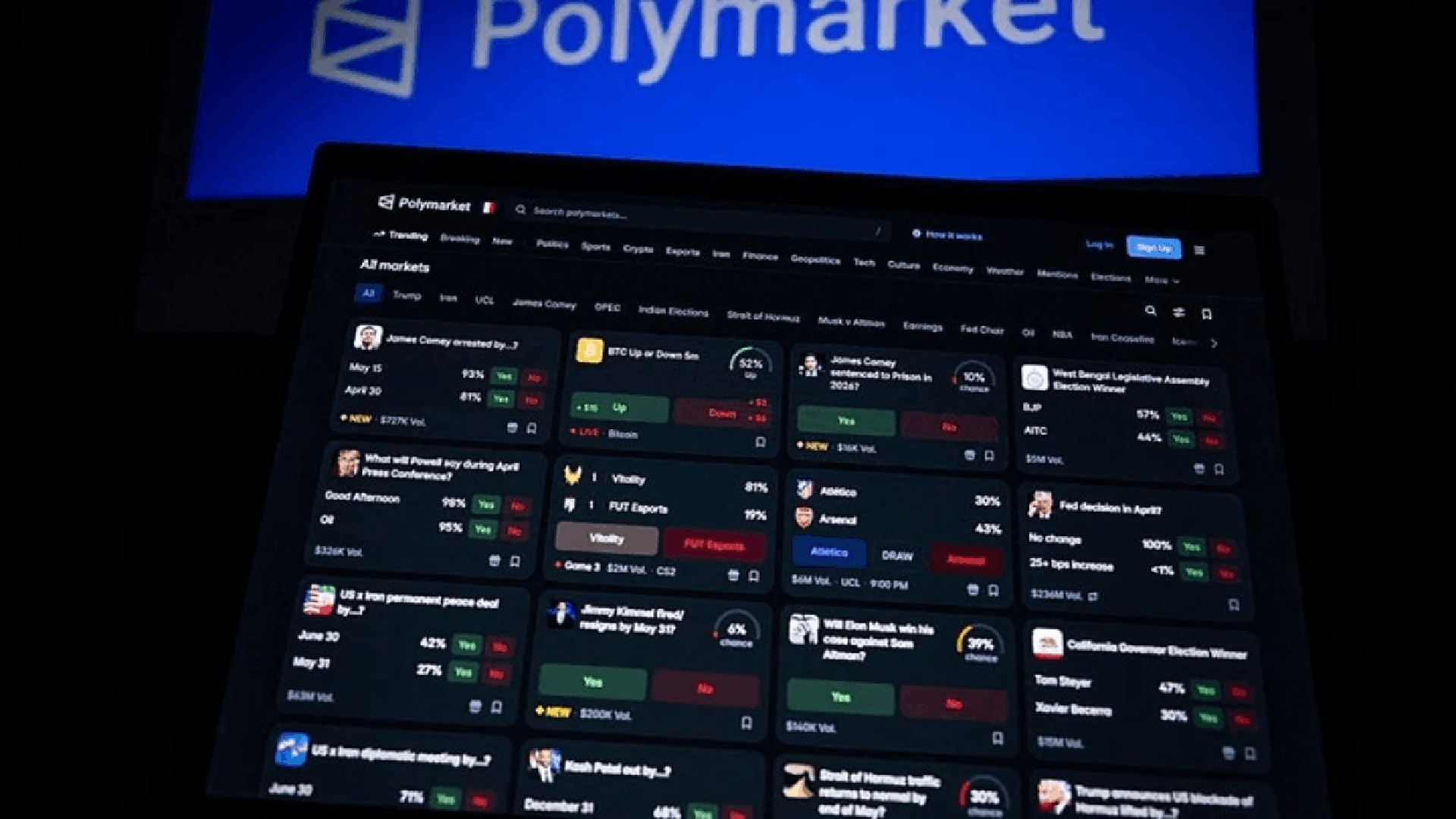
Despite its youth, the yes/no derivatives market is becoming more and more integrated with the traditional finance sector. The New York Stock Exchange (NYSE) is owned by Intercontinental Exchange (NYSE: ICE), which invested $2 billion in Polymarket last year.
sector makers who have long catered to Wall Street clients are among the main suppliers of liquidity on platforms like Kalshi, and a plethora of brokerage firms are now joining the sector. Prediction markets are becoming more and more useful for hedge funds and institutional investors who want to trade around specific economic news or who want to hedge positions that have been formed in traditional form, according to some analysts. Solomon, for his part, is approaching prediction markets with pragmatism.
“I think there’s a lot of reason to be excited and interested in these things, but the pace of change might not be as quick and as immediate as some of the pundits are talking about in both of these,” said the Goldman CEO on the conference call. “But I think they’re important and real, and we’re spending a lot of time.”